REVIEW · ST THOMAS
Discover Scuba Diving
Book on Viator →Operated by Aqua Action Dive Center · Bookable on Viator
First-timers, this is the clean on-ramp to scuba. In St. Thomas, you get a beginner course that starts in a classroom, moves into shallow water for skills, then finishes with a deeper-water underwater session in the bay or on a boat to nearby underwater sites. What I like most is how much hands-on coaching you get—your instructor stays right with you the whole time.
Two more things stand out: the take-home booklet helps you remember what you learned, and all the gear is included (tanks, weights, BCD, regulator, wetsuit, fins, mask, snorkel), so you’re not scrambling on vacation. One thing to consider: your first course is only about 3.5 hours, and the “big moment” is timed for beginners, so you won’t have hours underwater to explore on your own.
In This Review
- Key things to know before you go
- First-time Underwater Training in St. Thomas
- Classroom time: learning the system before you enter the water
- Shallow-water skills: confidence comes from repetition
- The finish: deeper water session or boat to underwater sites
- Value check: what $175 buys you in the real world
- Who should book this course—and who should pause
- Practical logistics that affect your comfort
- What to look for in your instructor team
- Should you book this Discover Scuba course?
- FAQ
- Do I need scuba certification for this experience?
- What’s included in the price?
- How long does the experience last?
- Will I go into deeper water?
- How big is the group?
- What should I do before I dive?
- Is it safe to fly and dive the same day?
- What about weather and cancellations?
Key things to know before you go
- Instructor by your side the whole time: safety checks and calm coaching are part of the package.
- All equipment included: no rental math, no guessing what fits.
- Classroom start, then shallow practice: you build comfort before you go deeper.
- Finish in deeper water or nearby sites by boat: the course ends with real underwater time.
- Small group size (max 12): less waiting, more individual attention.
First-time Underwater Training in St. Thomas
If you want the thrill of scuba without the pressure of certification, this is a smart way to start. You’ll be introduced to the basics in the classroom, then you’ll practice in the water where you can actually feel what you’ve just been taught. St. Thomas is a great place for this because you’re close to both sheltered bay conditions and easier routes to nearby underwater areas.
The big selling point is the structure: guided steps, plenty of supervision, and a clear path from first gear handling to the end-of-course underwater moment. You’ll also get a Discover Scuba booklet to take home, which is useful when you’re back on land and trying to remember the order of things.
One practical detail matters for planning: the experience runs about 3 hours 30 minutes. That’s enough time to learn the system, try the skills, and have a real underwater experience, but it’s still a half-day. If you’re hoping for a long, free-roam “vacation dive,” this isn’t that.
Other Scuba Diving in St Thomas & USVI
Classroom time: learning the system before you enter the water
The course starts with an instructor-led session in a classroom setting. This is where you’ll get the basics of how scuba equipment works and how breathing and control feel underwater. For many first-timers, this reduces that “panic math” that happens when you’re suddenly wearing a tank.
Then you shift into equipment orientation. In plain terms, you’ll handle the gear, learn how it should feel, and get guidance on what to watch for. The gear list is included—so expect to use everything you need: tank, weights, BCD, regulator, wetsuit, fins, mask, and snorkel.
This is also where patient instruction really shows. In multiple firsthand stories, the staff helped with early gear problems quickly and calmly. One example: Jack was described as very patient and clear, staying close and making sure people understood what was happening before moving on. That kind of pacing matters a lot when you’re new.
Shallow-water skills: confidence comes from repetition
After the classroom portion, you go into shallow water to practice the fundamentals. This part is about getting your body and brain on the same page: breathing through the regulator, clearing your mask if needed, understanding buoyancy basics, and learning how to move without fighting your equipment.
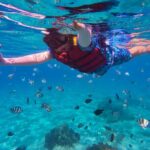
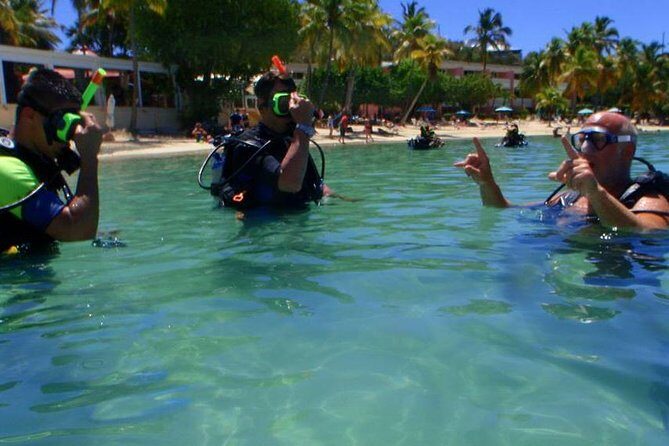
Shallow water is also where you can find the fun fast. Even without going deep, you’ll still see sea life close to where you enter, and that helps you connect the lessons to real underwater scenery. It’s a key reason this format works for beginners—comfort first, then wonder.
There’s a trade-off, though. One caution from a review: the shallower part can be close enough to feel similar to snorkeling for the visuals. That doesn’t mean it’s not valuable—it’s how you learn control—but it does mean you should think of the shallow segment as skill-building, not a full “exploration” experience.
The finish: deeper water session or boat to underwater sites
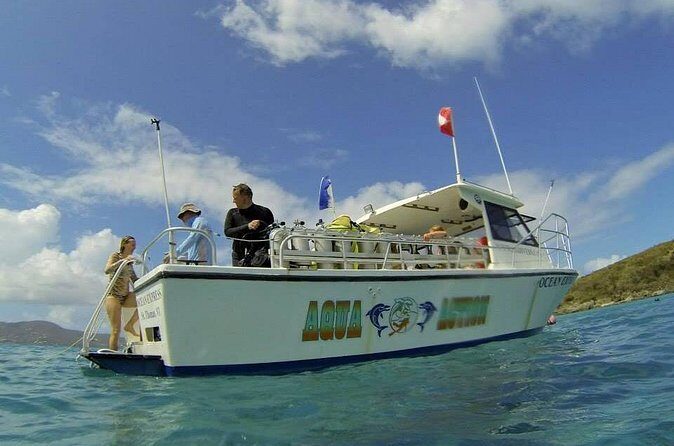
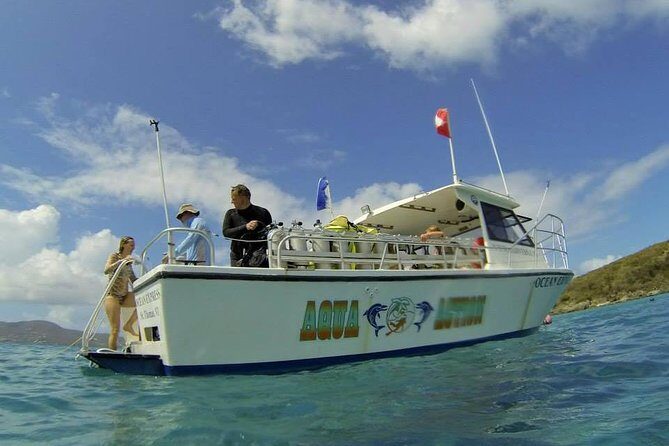
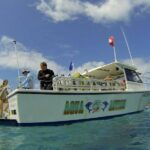
The course ends with a deeper-water underwater session. Depending on conditions and the day’s plan, you’ll either do this in the bay or you’ll go by boat to two Caribbean Sea underwater locations. Either way, the point is the same: you’ll apply what you practiced and spend meaningful time underwater by the end.
This is where the experience turns from training into memory-making. In the feedback, I saw a clear pattern: people loved the moment the real underwater world opened up. One featured account described seeing fish, corals, sea anemones, and even a very big stingray sleeping on the bottom. That’s exactly the kind of sight that makes first-timers grin and forget they were nervous ten minutes earlier.
If you’re a fan of reefs and wreck-adjacent areas, the option to visit underwater sites by boat is the most likely path to that. If you prefer a more sheltered feel, the bay-based deeper session can be a good fit. Your instructor team and staff will steer you toward the plan that makes sense for the day.
Value check: what $175 buys you in the real world
At $175 per person for about 3.5 hours, this course can feel pricey until you break down what’s included. You’re paying for trained instruction, supervision in the water, and the full set of scuba equipment. Many vacations require you to figure out rentals, sizes, and timing. Here, the gear is provided, which removes a chunk of hassle.
Then there’s the time value. This format compresses a lot of learning into one half-day: classroom basics, shallow practice, and then a deeper-water experience. You’re not paying for endless waiting or guessing games. With a max group size of 12, you’re also more likely to get prompt attention than you would in bigger, looser setups.
Finally, there’s the take-home Discover Scuba booklet. It’s small, but it helps you review what you learned right after your trip, instead of relying on shaky memory later.
One cost note: gratuities are not included, and 15–20% is recommended. If you budget for tipping up front, nothing will feel stressful at the end.
Other Scuba Diving in St Thomas & USVI
Who should book this course—and who should pause
This is a beginner-friendly way to try scuba without needing certification. If you’ve always wanted to experience breathing underwater, this course gives you that first taste with lots of support.
You should also feel comfortable with a moderate fitness level. You don’t need to be an athlete, but you do need to be steady enough for gear handling and time in the water. The course is supervised the whole way, yet you’re still dealing with wetsuit, fins, and moving carefully.
Health and safety matter. You’ll complete a health questionnaire before participating, and some medical conditions may prevent you from diving. If you have asthma, heart conditions, or anything similar, it’s smart to talk with your doctor before you travel. Also, diving within 24 hours of flying is not recommended, so plan your itinerary if you’re flying in or out soon.
If you’re traveling with friends and want a shared “we did it” moment, this fits well. The small group setup also makes it easier for instructors to tailor coaching without rushing people.
Practical logistics that affect your comfort
This experience is designed for a smooth, no-stress morning. You’ll receive confirmation at booking, and you’ll have a mobile ticket. The meeting area is in St. Thomas, and the experience ends back at the meeting point.
You’ll also find it convenient to reach, since it’s near public transportation. That helps if you don’t want to deal with parking or bouncing between multiple locations.
Timing-wise, expect the course to run about 3 hours 30 minutes total. Plan to be flexible around the day’s water and weather conditions. The experience requires good weather, so it can be adjusted or rescheduled if conditions are poor.
Finally, bring a mindset that says “learn first, explore second.” The equipment session and shallow skills are the path to that deeper-water experience at the end. If you treat it like a casual snorkeling outing, you may feel disappointed. If you treat it like training with a payoff, you’ll likely have a great time.
What to look for in your instructor team
Aqua Action’s instructor staff comes through clearly in the feedback. People consistently highlight patience, clear explanations, and instructors staying close to help when gear or technique feels awkward.
You’ll see names like Jack, Jaun, Danny, Stephanie, Sam, and Diane tied to positive experiences. One story described Stephanie as doing an excellent job in the water, while another praised instructors Jaun and Danny for being patient and helpful step by step. There’s also a strong theme of quick problem-solving—like when gear issues cropped up at the start, the instructor adjusted what was needed so the session could move forward smoothly.
That attention is not just nice. It’s the difference between “I’m trying” and “I’m actually learning.” If you’re nervous, choose a calm day of vacation and be upfront about how you feel. Good instructors handle that well.
Should you book this Discover Scuba course?
Book it if you want a first underwater experience with real instruction, included gear, and an instructor watching over you from start to finish. The format is built for beginners: classroom basics, shallow skills, then a deeper-water session, with a take-home booklet to keep your learning going.
Skip it or consider an alternative if you mostly want long, independent underwater exploring. This is training with a payoff, not a full-day exploratory outing. Also, if flying and tight schedules are in your plan, remember the guidance about avoiding diving within 24 hours of flying.
If you’re flexible, comfortable with a moderate fitness level, and ready to learn, this course is an efficient, beginner-friendly way to check scuba off your bucket list in St. Thomas.
FAQ
Do I need scuba certification for this experience?
No. It’s designed as a beginner introduction so you can try scuba without certification.
What’s included in the price?
The course includes all SCUBA-related equipment (tanks, weights, BCD, regulator, wetsuit, fins, mask, snorkel), a qualified instructor, and a Discover Scuba booklet.
How long does the experience last?
It runs about 3 hours 30 minutes.
Will I go into deeper water?
Yes. You’ll finish with a deeper-water session in the bay or you may go by boat to two Caribbean Sea underwater locations, depending on conditions.
How big is the group?
The experience has a maximum of 12 travelers.
What should I do before I dive?
You’ll complete a health questionnaire prior to diving. The experience also notes that some medical conditions may prevent you from diving.
Is it safe to fly and dive the same day?
No. Diving within 24 hours of flying is not recommended.
What about weather and cancellations?
The experience requires good weather. If it’s canceled due to poor weather, you’ll be offered a different date or a full refund.